
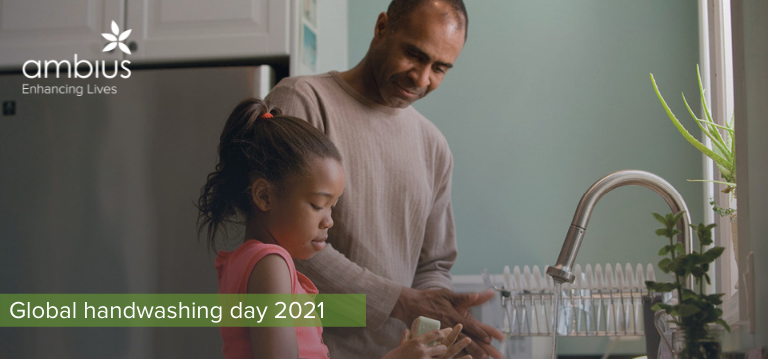
Our latest blog looks at why we celebrate global handwashing day here at Rentokil, Initial and Ambius.
From saving lives to protecting the vulnerable, vaccines are a strong argument for being one of humanity’s greatest achievements. 196 countries and territories have now administered Coronavirus vaccines to slow the spread of COVID-19.
Vaccinations alone, however, aren’t the solution. The pandemic is a stark reminder that the most effective ways to help stop the spread of COVID-19 (and other illnesses) are also the simplest: wearing a mask and good hand hygiene.
While clean, safe air is more important than ever (and you can read more about the risk of poor air quality here) a recent study also found that regular handwashing with soap can reduce the likelihood of COVID-19 infection by 36%.

Hand hygiene and hand washing
Hand sanitisers offer an extra layer of hygiene, but handwashing with soap is often considered the easiest, most effective and affordable solution to hand hygiene.
However, during the pandemic, 2.3 billion people worldwide did not have access to a hand hygiene facility in their homes, leaving them at risk of COVID-19 and other infections because they could not wash their hands.
By 2030, it’s predicted that 78% of people will have access to handwashing facilities. But this still leaves approximately 1.9 billion people unable to do something most of us take for granted.
Why celebrate Global Handwashing Day?

The first Global Handwashing Day was launched in October 2008, and reached 120 million children in 73 countries across 5 continents. Since that successful introduction, Global Handwashing Day has gone from strength to strength. Last year, over 770 million people across 150 countries were involved. The main aim is simple – to annually highlight the importance of handwashing with soap.
Each year there’s a different theme for Global Handwashing Day. This year, it’s ‘Our future is at hand – let’s move forward together’.
As we try to move beyond COVID-19, there’s still so much work needed for the current momentum to be sustained.
What are the benefits of handwashing?
Washing hands is the most effective way to prevent the spread of illnesses that challenge our health and development. Poor hand hygiene can quickly spread germs around shared spaces via common touchpoints, such as door handles and stair rails.
By helping to stop outbreaks, handwashing remains an essential COVID-19 prevention measure while vaccines are being rolled out.
Global Hygiene Research
Initial Hygiene, part of Rentokil Initial, recently examined the global shifts in societal behaviour for hygiene. A total of 20,000 respondents across 20 countries (including South Africa) took part in the survey. It examined the impact of hygiene attitudes and practices on mental health and wellbeing, employee and organisational expectations, and hygiene responsibilities.
The Global Hygiene Reset report revealed that not only have attitudes shifted – but so have expectations. 58% of respondents will use hand sanitiser in the future to protect against common viruses (regardless of whether or not they have already washed their hands). This demonstrates a more acute awareness of hand hygiene and how easily our hands can transmit germs.
In the workplace, this percentage increases, with 61% of people working in shared spaces stating that they’re now likely to sanitise their hands regularly at work to manage hygiene risks.
But this statistic varies greatly from country to country. 85% of respondents in South Africa said they would sanitise their hands regularly to manage potential risks in a workplace environment.
Make sure your business can meet these sorts of colleague expectations with SaniGreen from Ambius. SaniGreen is our new hand sanitiser stand that includes a live (or silk) plant to ensure that workplace hygiene is second nature.
Talk to us today about how Ambius can support your efforts to improve hand hygiene in your environment – and remember to celebrate Global Handwashing Day on the 15th October.




Leave a Reply